It was one of those soft spring Saturdays, where the breeze feels just warm enough to trust.
We didn’t have a plan — just wandered through the quiet residential streets near Jangsan Station,
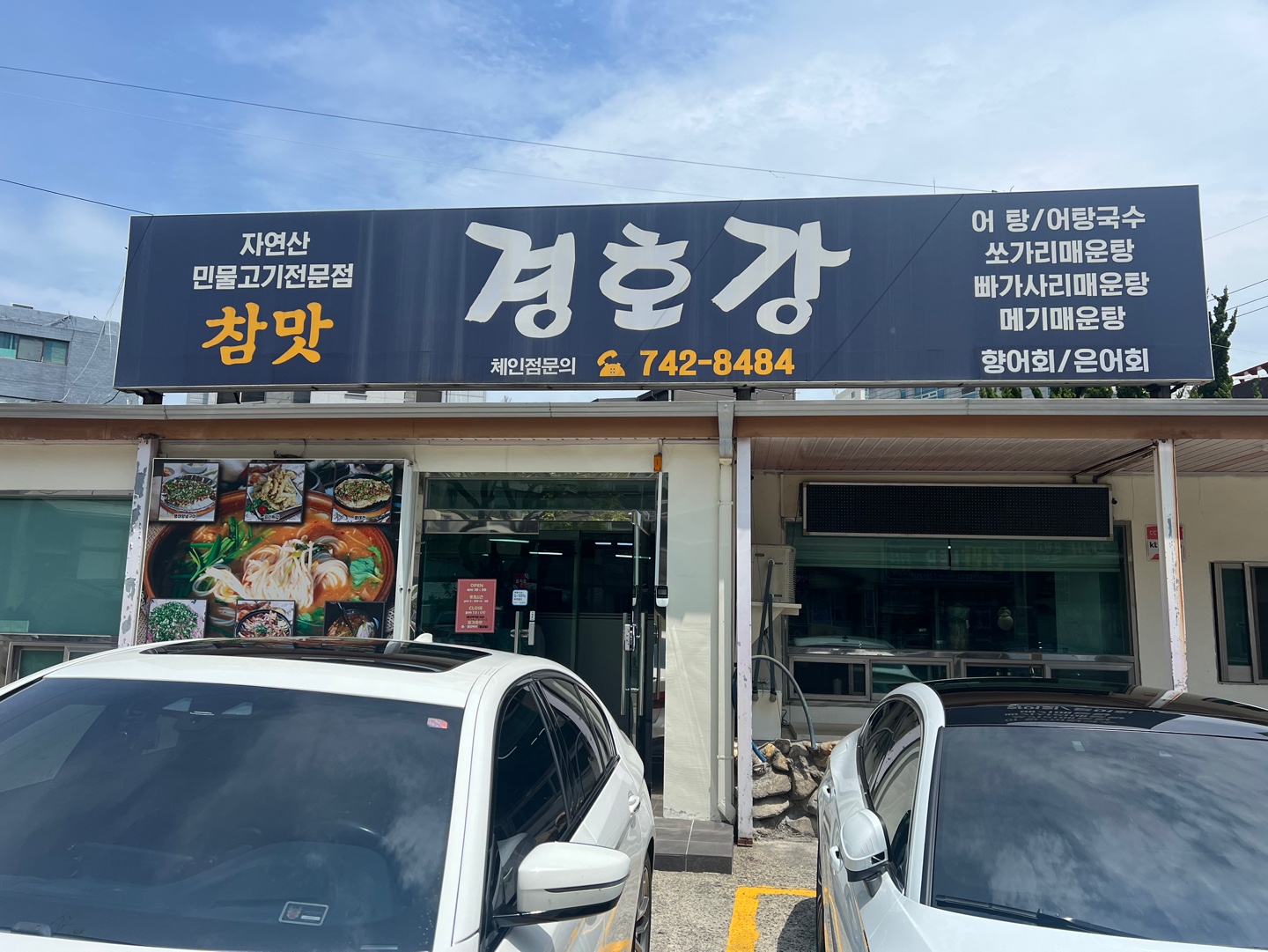
until we saw the familiar sign: Gyeongho River Eotang (경호강어탕).
This was our third visit.
🪴 Not Fancy. Just Honest.
The restaurant sits across from a Top Mart, tucked between apartments and corner shops.
The sign is modest, but the large freshwater fish tank out front gives it away.
Inside, it was nearly full by noon.
Locals — not tourists — filled the tables. Their dialects, their work clothes, their quiet presence.
No noise, no social media clatter. Just people enjoying a good lunch.
This wasn’t a trendy café.
It was a place where food speaks louder than design.

🥢 What We Ordered
- Eotang Kalguksu (어탕칼국수)
- Eotang Jeongsik (어탕정식)
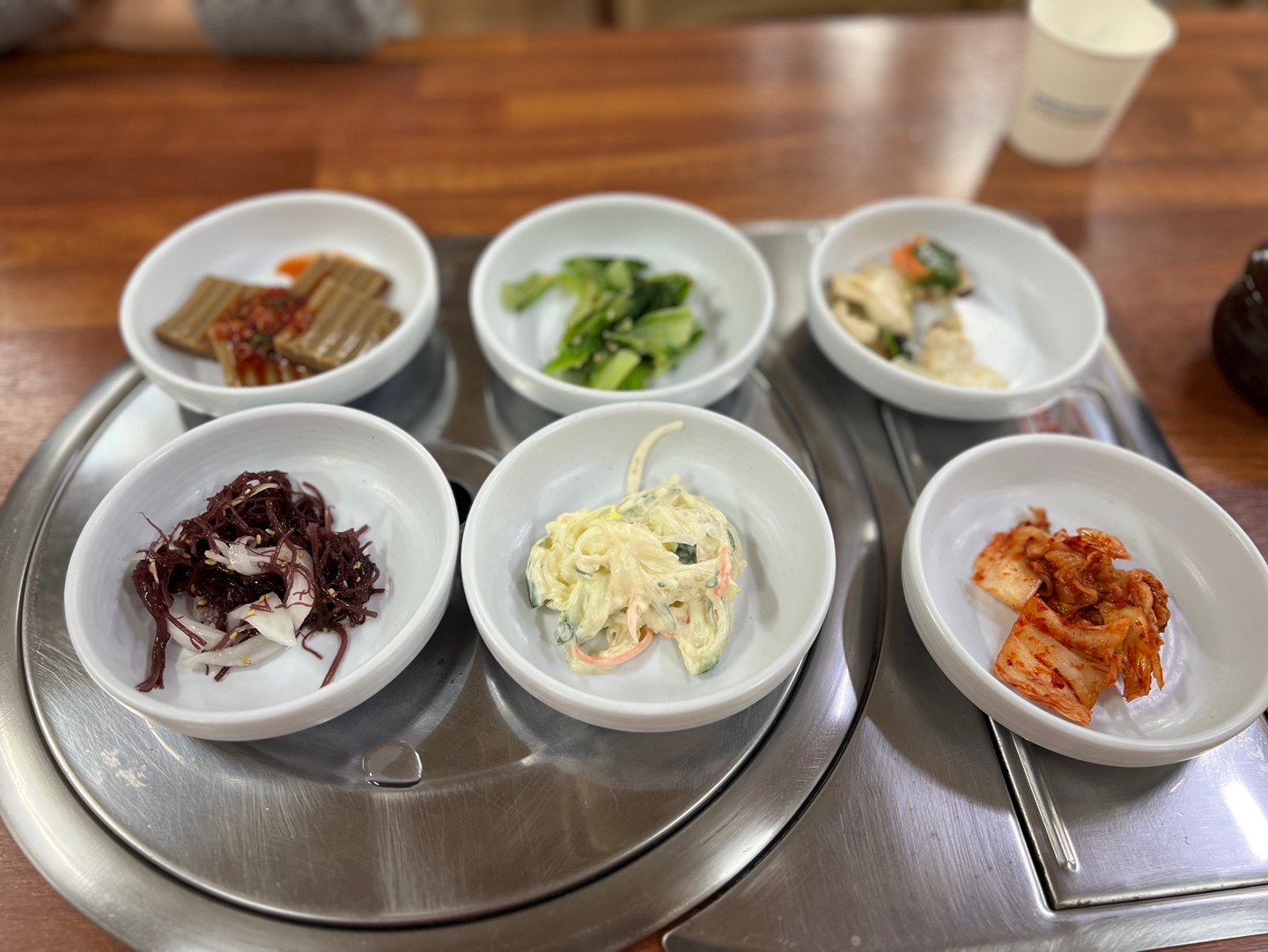
Each arrived in large ceramic bowls, with a side of small banchan:
dotori-muk (acorn jelly) with sweet-and-spicy sauce, fresh seaweed salad, lightly dressed greens, and clean-cut kimchi.
The dotori-muk was unexpectedly addictive — silky, just firm enough, and seasoned perfectly.
We asked for a refill. No hesitation.

🍜 The Broth – Earthy, Herbal, Real
The fish soup (eotang) looked simple.
But one sip told another story.
The broth was warm and nutty, somewhere between golden and earthy brown — not too clear, not too heavy, just right.
Minced freshwater fish added texture and umami, but what really lifted the dish was the topping of chopped scallions and…
jaepi-garu (재피가루).
This subtle spice — somewhere between perilla, sichuan pepper, and toasted sesame — transformed the entire bowl.
Just a small spoonful was enough.
It didn’t shout. It whispered something old and local.

🍲 Kalguksu vs. Jeongsik
The Kalguksu version came with thick handmade noodles that held their shape even after soaking.
They were chewy, not mushy, and matched the richness of the broth without stealing the spotlight.
The Jeongsik came with rice instead —
but hidden in the broth were torn pieces of hand-pulled dough, like a quiet nod to sujebi.
The rice grounded the meal. The chewy bits of dough made it more than just soup.
It wasn’t complicated.
But it felt complete.

💸 Price & Portion
Each bowl was ₩11,000, and we left completely full.
For this level of care, freshness, and portion size? Absolutely fair.
In a city where trendy dishes often come with trendier prices,
this place is a reminder of what food can be — and still is — for locals.
🧭 Why You Should Go
Gyeongho Eotang isn’t flashy.
It won’t show up on Michelin guides or get TikTok views.
But it will serve you a bowl of soup that tastes like someone’s home recipe — polished through decades.
If you’re near Jangsan, tired of chains and coffee drinks, and craving something quiet, nourishing, and real,
this is where you go.
Some meals don’t need plating or filters.
They need just a spoon, some steam, and time.
This was one of them.
And even though it was our third visit — we’re already looking forward to the fourth.
📍 Location
Gyeongho River Eotang (경호강어탕)
14 Jwadong-ro 53beon-gil, Haeundae-gu, Busan, South Korea
🕐 Best time: Weekday lunch, before noon to avoid waiting
🍲 Must-try: Eotang with jaepi-garu, kalguksu version
🚇 Nearest station: Jangsan (Exit 2), short walk


